Tuesday, 7 July 2015
SWIFT calamity
Since I moved in to Little Chalfont some 28 years ago, COMMON SWIFTS have nested in some numbers in the village. This year has been an exception though, with just three pairs returning to breed at Chaffinch House, rather than the usual 8-10 pairs. As a result, just two young fledged and looking out on this blustery evening, it seems that they have departed south already, much earlier than usual. I shall miss their loud screams as they wheel about the house chasing insects (and each other). What worries me more though is that sooner rather than later, my Swifts won't be coming home at all, such is the serious decline in numbers. Depressing news and adding to the near extinction of House Sparrows in my garden (from an average of 78 birds 1987-2013 to just 2 now) and the loss of nearly 90% of Greenfinches through disease.

Recent images from the Chess Valley
Since early May I have been away on numerous long birding trips and have had little opportunity to do any 'local birding'. As a result, virtually nothing of any interest has been seen....
On 2nd July, I did a full inventory of local sites but found little to shout about. Here are some images I took that day......


On 2nd July, I did a full inventory of local sites but found little to shout about. Here are some images I took that day......

Plenty of Foxgloves in full bloom


Stacks of Banded Demoiselles along the Chess
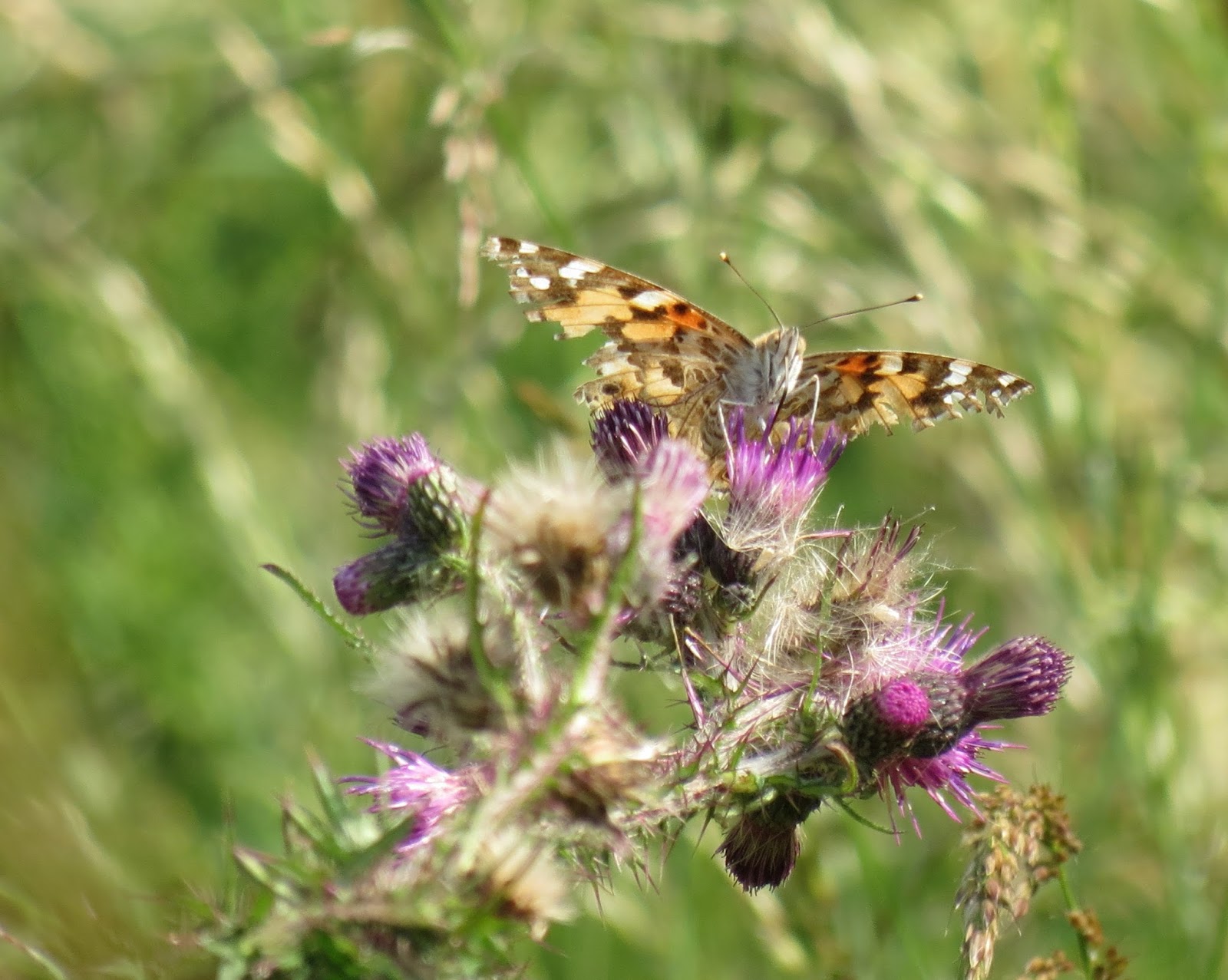


A Painted Lady close to Crestyl Cress Beds - very scarce in the Chess Valley but coinciding with a huge irruption from North Africa


An excellent summer for Small Tortoiseshells

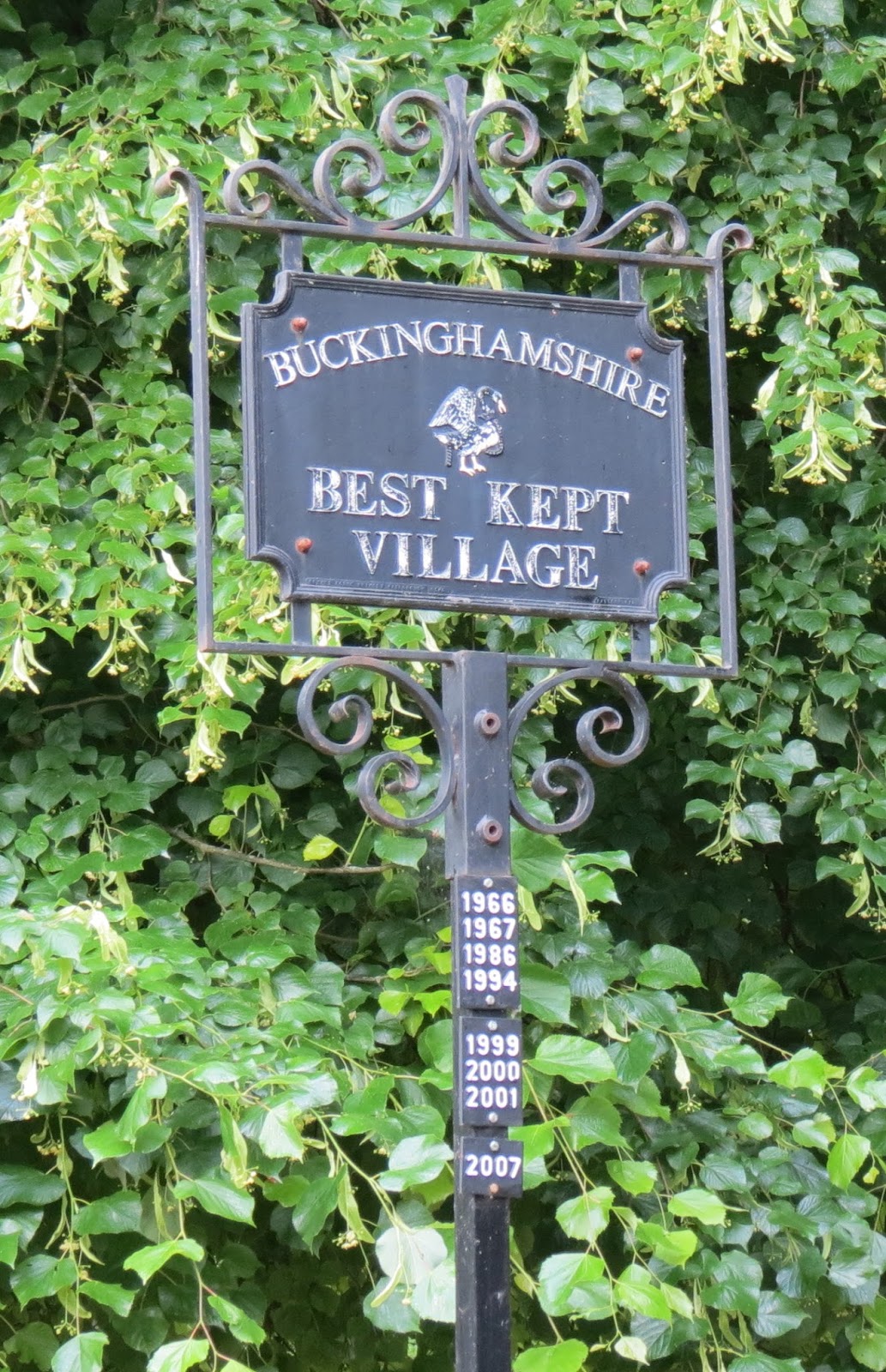
Buckinghamshire's consistently Best Kept Village - Chenies

and a local supercar
Monday, 4 May 2015
WHEATEAR at Pednor today
At last, the first WHEATEAR in the Amersham Recording Area today - back in the ploughed fields just beyond the model aircracft flying field at Pednor.....
Tuesday, 14 April 2015
First-ever EGYPTIAN GEESE for the Amersham Recording Area......
Monday 13 April
Another gorgeous day for mid April with
temperatures soaring to a high of 70 degrees fahrenheit with wall-to-wall
sunshine
Following information kindly supplied by Rob
Andrews (to the BBC website), I was up at first light and out at SHARDELOES LAKE
by 0700 hours. Rob had found a pair of EGYPTIAN GEESE on Sunday evening - the
first-ever record for the Amersham Recording Area. Both birds had presumably
roosted on the lake overnight and had relocated to the cricket field - showing
well and allowing me to obtain a large number of photographs. Well
pleased!


Although I failed to find RDA's pair of
Teal, the early morning rollcall included 4 Little Grebe, Great Crested Grebe, 4
Mute Swan (breeding pair and two of last year's offspring), 40 Canada Geese, 1
GREYLAG GOOSE, 6 Mallard, 9 Gadwall, pair of Pochard, 17 Tufted Duck, 22 Coot,
12 Moorhen, female Kestrel, 3 Red Kite, 4 Argenteus Herring Gulls (3
first-years & a second-year), pair of Lesser Black-backed Gulls, Stock Dove,
Common Kingfisher, Green Woodpecker, Grey Wagtail, 2 singing Chiffchaffs, Song
Thrush, Nuthatch and Jay; the Rookery now containing at least 23 occupied
nests.
Walking the DRY CANAL above WILSTONE
RESERVOIR, was very pleased to find the two NORTHERN WHEATEARS still present on
the manure heaps to the south, with 8 Skylark, Blackcap, Common Chiffchaff, male
Yellowhammer, 2 Goldfinch and 3 Red Kites noted.
Little change on WILSTONE with all 3
GARGANEY still present, 3 Pochard, 28 Black-headed Gull, 2 first-summer Common
Gull, a first-summer Herring Gull, 5 Teal and 8 Shoveler. The East Bank Wood
held singing Blackcap, Chiffchaff and Willow Warbler, with 22 Sand Martin and 8
Barn Swallow over.
Over at STARTOP'S END, a COMMON SANDPIPER, 2
Common Redshank and 4 COMMON TERN were on the bales, with 10 Mute Swans
(including 9 first-summers), 2 Greylag Geese, female Red-crested Pochard, Mistle
Thrush, Greenfinch and singing male Reed Bunting noted. A 'new' singing male
WILLOW WARBLER was in trees along the west bank in the NW corner.
In the Bucks reedbed section of MARSWORTH
RESERVOIR, a singing male SEDGE WARBLER was a 'year-tick', with Western Reed
Warbler there (plus the 2 by the overflow), Common Kingfisher, £ Common Terns
and 2 Jays; 15 Barn Swallows were overhead.
PITSTONE HILL was alive with the sound of
singing & displaying Skylarks and Meadow Pipits, as well as 2 jangling male
CORN BUNTINGS. A pair of COMMON STONECHAT was present too, along with Great
Spotted & Green Woodpecker, Linnet, Yellowhammer and this cracking male
GREENLAND WHEATEAR.
In neighbouring INKOMBE HOLE, 3 male RING
OUZELS were commuting between there and the bottom fenceline of STEPS HILL, with
the only other migrants evident being Song Thrush and male
Blackcap.
On ALDBURY VILLAGE POND, most surprising
sight was of this pair of confiding MANDARIN DUCKS on the Village
Pond.......
Then, just after 2.15pm, Steve Blake phoned
to say that Ian Rose had found a 'Bluethroat' at AMWELL and warden Darren Bast
had photographed it!! This was a true mega for Hertfordshire, none of the 6
previous records being twitchable. My closest county rival Graham White had
fortuitously stumbled into the last one trapped & ringed at Rye Meads Sewage
Farm on 4 April 1983 so I had added impetus to try and see this one. Following
Steve's call I was off, arriving just over half an hour later at the watchpoint
overlooking GREAT HARDMEAD LAKE. Around 20 Amwell birders were already on site,
Mike Ilett & Barry Reed being two of those that had already connected.
Darren showed me his back of camera shots and there it was - a cracking male
WHITE-SPOTTED BLUETHROAT. Around 15 of those gathered had seen the bird fly a
few minutes prior to my arrival from the reedbed on the left to that on the
right and it was to be another 20 minutes before it was re-sighted - hugging the
edge of the reedbed. It soon became apparent that it was walking a circuit of
the fragmented reedbed, showing about once every 50 minutes on average. The
problem was the number of observers on the watchpoint trying to get a view -
numbering 65 at one point. I remained on site from 1500-1915 hours, eventually
obtaining a series of largely record shots (see below) as it hopped out for just
seconds at a time. By dusk, over 100 observers had connected.
It constituted the sixth county record and
the first since 1983 -:
1) A male White-spotted at Aldenham
Reservoir on 4 March 1942;
2) A male at Marsworth Reservoir on 23
September 1969;
3) A first-year female at Tewinbury on 12
September 1970;
4) A White-spotted found dead at Spellbrook,
Bishop's Stortford, on 29 April 1978;
5) A male trapped & ringed at Rye Meads
on 4 April 1983.
A pair of BLACK-NECKED GREBE in transitional
plumage were also seen from the watchpoint, as well as 6 Little Egret, Egyptian
Goose, 4 Gadwall, 2 Teal, 10 Shoveler, 2 Oystercatcher, 4 Redshank, 6 Lapwing, 2
Snipe, Common Sandpiper, 2 Common Tern, 2w YELLOW-LEGGED GULL, Water Rail,
Common Kingfisher, 32 Sand Martin, 8 Swallow, SEDGE WARBLER, 2 Cetti's Warbler
and Reed Bunting
Wednesday, 1 April 2015
SWALLOWS back in force this evening...
No less than 6 EUROPEAN BARN SWALLOWS had returned this evening, hawking back & forth over CHESHAM FISHING LAKES; also 20 Tufted Ducks, the male Great Crested Grebe, 3 Grey Wagtails, Stock Dove and a single singing COMMON CHIFFCHAFF noted with a pair of LITTLE EGRET acting suspiciously on the POW WOW LAKE. Chris Pontin had 50+ Linnet in the vicinity of HILL FARM


Monday, 30 March 2015
Chesham Waterside MUTE SWANS all ready for another year....


Meanwhile, the LITTLE OWL pair have been enjoying the sun on the odd day it has shone.....


Monday, 16 March 2015
First migrant COMMON CHIFFCHAFF and LITTLE EGRETS becoming urbanised.......
MONDAY 16 MARCH
No sign of the female Blackcap at the
CHAFFINCH HOUSE feeders early morning but a COAL TIT
Rain set in early today and although light
and patchy continued throughout the rest of the day. Pretty cold still too at
just 6 degrees C with a very slight northerly wind.
In the BOIS MILL area in the CHESS VALLEY, 2
Little Egrets and a single Mute Swan on the meadow brook and 2 Mute Swans, 8
Canada Geese, 2 Coot & 2 Grey Heron on the lake.
Along the WATERCRESS COTTAGE LOOP TRAIL,
Grey Heron, 5 Red Kite, 2 Magpie, singing Great Tit, Goldcrest, 2 Wren and this
Reeve's Muntjac noted...

On the POW WOW LAKE, we have two pairs of
Grey Heron nesting this year, with 2 Mute Swans, 2 Coot and a pair of Gadwall
also in attendance, Red Kites overhead and Great Tit, Song Thrush, Wren and
Chaffinch all in song. The first COMMON CHIFFCHAFF of the spring in the Chess
Valley is singing away for its third day on the CHESHAM FISHING LAKES, where
green Woodpecker, 3 Goldfinch, 2 Magpie, several Robins, 6 Dunnock, 6 Moorhen, 2
Mute Swans, 12 Coot, the Great Crested Grebe, 27 Tufted Duck, 8 Canada Geese, 46
Black-headed Gull, 3 Common Gull, adult Lesser Black-backed Gull, 2 Blackbird,
Chaffinch and Common Treecreeper all noted. A pair of Grey Wagtails was by the
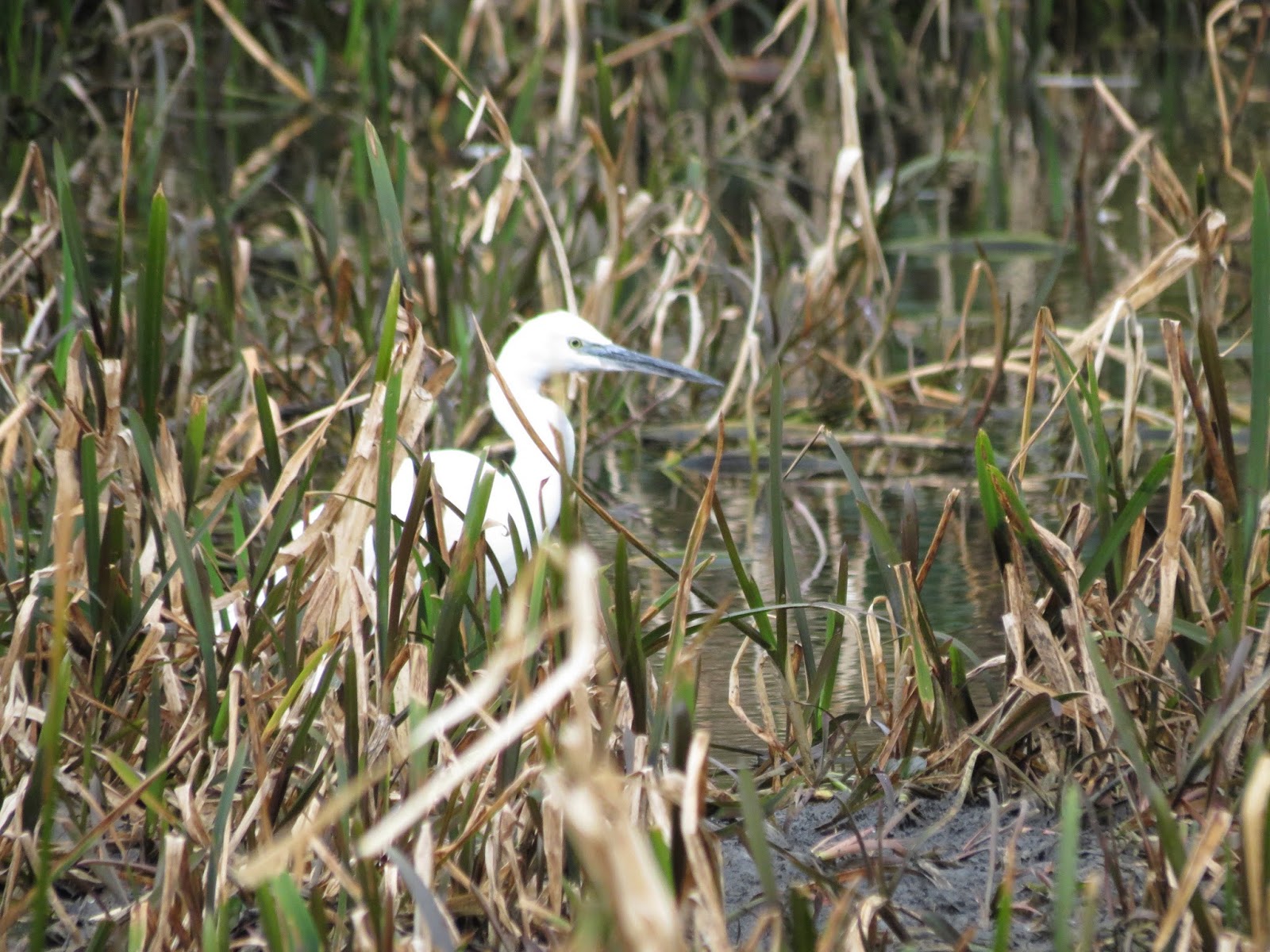
waterfall and a Little Egret on the Chess adjacent. A further Little Egret was
foot-paddling in the Chess at WATERSIDE.




A visit to WILSTONE RESERVOIR yielded little
of note, with wildfowl numbers largely depleted. Migrants were null and void.
Just 9 Wigeon remained, along with 4+ Teal, 40 Shoveler, 2 Pochard, 55 Tufted
Duck and 2 Mute Swan, with the Barnacle Goose dropping in with the Greylag Geese
in Cemetery Corner. Singing COMMON CHIFFCHAFFS included singles in the north
hedgerow by the new overflow and in the Black Poplars just beyond the bridge,
whilst Jay, a pair of Common Treecreepers (new for 2015), Goldfinch, Skylark,
Common Pheasant, singing male Mistle Thrush, Song Thrush, Little Egret and 6
Lapwing were also noted. Thanks to a rendezvous with Gary Hinton, I connected
with my first LINNETS of the year - a flock of at least 40 in the grassy field
immediately west of the Drayton Bank trees. At least 17 Reed Bunting were also
in the field, as well as 7 Yellowhammers and 40 Chaffinch.
Over at TRINGFORD RESERVOIR, a single Meadow
Pipit was in the grass field by Tringford Farm, with 3 Mistle Thrush, 30
Redwing, Little Egret, 2 Shoveler, 4 Pochard, 6 Mute Swans, Long-tailed Tit,
Song Thrush, 4 Dunnock, Skylark, Grey Wagtail, Kestrel, Great Tit and 2 Pied
Wagtails also being seen. The number of active Rook nests had risen to 9, with a
pair of Lesser Black-backed Gulls holding territory on the concrete turret in
the centre of the reservoir. In the field opposite the Sewage Works, the
Barnacle Goose was with 16 Greylag and 26 Canada Geese - a site first for
me.
A staggering 24 Great Crested Grebes was
present on MARSWORTH, with Coot numbers increasing to 10, 3 Tufted Duck, the
Mute Swan pair, just 5 Shoveler, 30 Black-headed Gulls, 4 Pied Wagtails, singing
Reed Bunting and the overflow CETTI'S WARBLER all being recorded.
A flock of 8 SAND MARTIN were hawking for
insects over the east side of STARTOP'S END RESERVOIR, with the first-winter
female GREATER SCAUP still present, diving out in the centre. A juvenile HERRING
GULL was a migrant, with 4 Little Grebes still present and just 2 Wigeon. The
only Mute Swan present was '4BKD', with the female Red-crested Pochard still on
the canal and 6 Pied Wagtails on the north bank; the GREY WAGTAIL pair were busy
checking out potential nesting sites near the car park.
Walking the WILSTONE GREAT FARM FIELDS with
Gary Hinton, we came across an impressive feeding flock of farmland birds,
including at least 60 Yellowhammer, 32 Reed Bunting and 8 Chaffinch. Also at
least 4 Meadow Pipits in the vicinity, as well as Song Thrush, 10 Redwing and 8+
Skylark
Subscribe to:
Posts (Atom)